
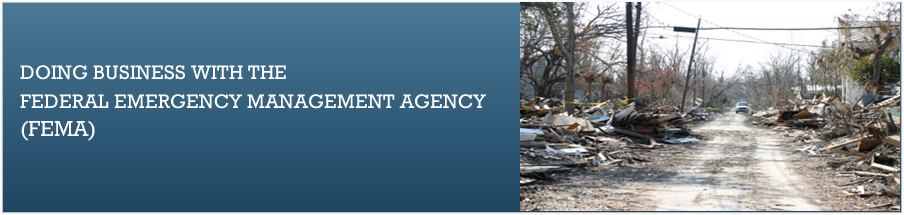
Certain private nonprofit organizations that experienced damage from Hurricane Sandy may qualify for reimbursement of certain costs under the Federal Emergency Management Agency’s Public Assistance program.

The program reimburses government entities, tribal nations and nonprofits for debris removal, emergency protective measures and permanent restoration of disaster-damaged infrastructure to pre-disaster condition.

Federal regulations separate nonprofits into two categories: critical facilities, such as schools, utility companies, emergency service companies and hospitals; and noncritical facilities, such as low-income housing, assisted living homes and rehabilitation programs. Both may apply for reimbursement of eligible expenses under the PA program.

However, noncritical facilities must also apply to the U.S. Small Business Administration for a low-interest disaster loan. If SBA declines the loan, or if the loan does not cover all eligible damage, FEMA may be able to provide cost-shared assistance.

Applicants submit their formal Request for Public Assistance to the state. For more information, nonprofit organizations should contact Connecticut’s Public Assistance program at 860-256-0801.

Fairfield, Litchfield, Middlesex, New Haven, New London, Tolland and Windham counties, and the Mashantucket Pequot and Mohegan Tribal Nations within New London County are designated for PA. The deadline for submitting a Request for Public Assistance to the state is Dec. 30.

Under the program, the state is the grantee, and the applicants are the subgrantees. In other words, FEMA grants the money to the state, which distributes the funds to the applicants after all documentation is received.

The U.S. Small Business Administration (SBA) is the federal government’s primary source of money for the long-term rebuilding of disaster-damaged private property. SBA helps homeowners, renters, businesses of all sizes, and private, nonprofit organizations fund repairs or rebuilding efforts, and covers the cost of replacing lost or disaster-damaged personal property. These disaster loans cover losses not fully compensated by insurance or other recoveries and do not duplicate benefits of other agencies or organizations.

FEMA’s mission is to support our citizens and first responders to ensure that as a nation we work together to build, sustain, and improve our capability to prepare for, protect against, respond to, recover from, and mitigate all hazards.

Taken from: 

Nonprofits Should Notify the State of Damage in Case a Public Assistance Grant Is Needed
NEW YORK – The State of New York and the Federal Emergency Management Agency have new Disaster Recovery Centers in Kings and Nassau counties to assist Hurricane Sandy survivors.

Locations and hours of the centers are:

Kings County
MCU parking lot
1904 Surf Ave.
Brooklyn, NY 11224
Hours: 8 a.m. to 6 p.m. Mon-Sun

Nassau County
Meadowmere Park
14 Meyer Ave.
Lawrence, NY 11559
Hours: 8 a.m. to 6 p.m. through Fri., Dec. 14

Disaster Recovery Centers are one-stop shops for eligible storm survivors to get face-to-face help as quickly as possible.

In addition to the new sites in Kings and Nassau counties, about 25 other recovery centers remain open throughout New York to help those affected by Hurricane Sandy. Anyone who sustained damage in counties designated for federal individual disaster assistance can visit any of the centers. 

To find the nearest center, the following options are available: Text DRC and a Zip Code to 43362 (4FEMA), and a text message will be sent back with the address. Also, check out the DRC locator at www.FEMA.gov/disaster-recovery-centers.

Individuals can register for help online at www.disasterassistance.gov or via smartphone or tablet at m.fema.gov. Applicants may also call 800-621-3362 or (TTY) 800-462-7585. Applicants who use 711-Relay or Video Relay Services (VRS) can call 800-621-3362. The toll-free telephone numbers operate 24 hours a day, seven days a week until further notice.

Federal disaster assistance for individuals and families can include money for rental assistance, essential home repairs, personal property losses and other serious disaster-related needs not covered by insurance.

For more information on New York’s disaster recovery, visit www.fema.gov/disaster/4085, http://twitter.com/FEMASandy, www.facebook.com/FEMASandy and www.fema.gov/blog.

This article is from:  

New Disaster Recovery Centers Open in Kings, Nassau Counties

TRENTON, N.J. — Hurricane Sandy left behind more than physical destruction. As people in New Jersey begin to rebuild, every affected family has faced a disruption of their normal lives. Many must also confront the anguish of losing a home.

Children are particularly vulnerable to the stress that follows a natural disaster, and their symptoms may linger much longer than in adults, according to mental health experts. They also react to how adults behave in stressful situations, so it’s important for parents and caregivers to look after their own mental health in the wake of a disaster.

Parents and other caregivers should be alert to signs of stress-related troubles and learn how to deal with their children’s fears and unusual behaviors.

Children ages 5 or younger may cry more frequently than usual, become clingy, have nightmares, show excessive fear of the dark, fear of animals or fear of being alone. Appetites may change. They may speak with difficulty or revert to behaviors such as bed-wetting or thumb-sucking.

Children ages 5 to 11 may exhibit increased irritability, aggression, and competition with their siblings for parental attention. Some become preoccupied with the disaster and want to talk about it continually. They may also show anxiety through whining, withdrawing from their peers, and losing interest in normal activities.

Teenagers 11 to 18 may show outright rebellion, physical problems, and sleep disturbances. They may engage in risk-taking behaviors such as reckless driving or alcohol and drug abuse.

Those signs of anxiety often result from the losses, disruption to family life, and a sense of a hostile world created by a natural disaster. The following suggestions may help to reduce stress in children:

  • Spend time each day giving each child undivided attention, even if just for a few minutes. Share experiences. Reaffirm your love. Make plans together. Just “be there” for each other.
  • Encourage them to talk. Ask children to describe what they are feeling. Let them talk about the disaster and ask as many questions as they like. Listen to what they say. Assure them that the disaster was an act of nature and not caused by them. Include the entire family in the discussion, if possible.
  • Understand their fears. It is important that parents accept anxieties as being very real to children. Help them understand what causes their anxieties and fears. Recognize their losses, such as their pets, favorite toys and other personal items. Reassure them that everything will be all right.
  • Explain what is going on. Make every effort to keep children informed about what is happening. Explanations should be in simple language. With children 5 or older, rehearse safety measures for use in case of future disasters.
  • Reassure them. Parents can help reassure children by telling them they are safe, holding and hugging them frequently, restoring normal routines, providing play experiences for them, and making bedtime a special moment of calm and comfort.
  • Encourage activities with their peers. As with adults, social time with friends is a very important part of the recovery process.
  • Temporarily lower expectations of them. Allow for the fact that stress from the disastercan show itself in many ways over a period of time, and make appropriate allowances. 

The New Jersey Department of Human Services is coordinating statewide efforts to help individuals and communities manage the emotional impact of the storm. Crisis counselors are currently providing support in many shelters and assisting in FEMA Disaster Recovery Centers as needed. 

In addition to providing face-to-face disaster crisis counseling, the state provides informational materials about coping and they partner with the Mental Health Association in New Jersey to offer assistance through a toll free helpline: 877-294-4357 (also apples to VRS or 711-Relay users)or TTY 877-294-4356. Or visit their website: www.state.nj.us/humanservices/dmhs/disaster/.

Parents, guardians and caregivers may also want to contact their local mental health agency for information on resources in their community that can assist children after disasters.

For more information call 877-652-7624, 24 hours a day, seven days a week; or visit the website www.performcarenj.org.

PHOTOS: See following links.

http://www.fema.gov/photolibrary/photo_details.do?id=60773

http://www.fema.gov/photolibrary/photo_details.do?id=60020

THESE 2 PHOTOS ARE FROM 2007 NEW JERSEY DISASTER:

http://www.fema.gov/photodata/original/29748.jpg

http://www.fema.gov/photolibrary/photo_details.do?id=29744

FEMA’s mission is to support our citizens and first responders to ensure that as a nation we work together to build, sustain, and improve our capability to prepare for, protect against, respond to, recover from, and mitigate all hazards.

Follow FEMA online at www.fema.gov/blog, www.twitter.com/fema, www.facebook.com/fema,

Land www.youtube.com/fema.  Also, follow Administrator Craig Fugate’s activities at www.twitter.com/craigatfema

The social media links provided are for reference only. FEMA does not endorse any non-government websites, companies or applications.


View original: 

Children Vulnerable To Disaster-Related Stress

NEW YORK – Five weeks after Hurricane Sandy howled into meteorological history, the State of New York and the Federal Emergency Management Agency continue at full pace to assist survivors of the devastating storm.

Twenty-seven New York Disaster Recovery Centers remain in place to provide one-on-one, face-to-face help to people rebuilding their homes and lives following the hurricane. Most are open seven days a week. 

Recovery centers throughout New York have cumulatively hosted more than 83,000 Sandy survivors since Nov. 1, when storm winds had barely stopped blowing. To most conveniently serve the public, centers have been positioned in various neighborhoods, boroughs and counties. They have operated in locations ranging from churches to parks, government buildings, stores and a library.  

County by county and borough by borough, current New York locations and hours of operation are: 

Nassau
Recreation and Ice Arena
700 Magnolia Blvd.
Long Beach, NY 11561
Hours: 9 a.m. to 6 p.m. Mon-Sun

Sacred Heart Parish
RR station parking lot
127 Long Beach Rd.
Island Park, NY 11558
Hours: 9 a.m. to 7 p.m. Mon-Sun

Mitchell Field Athletic Center
1 Charles Lindbergh Blvd.
Uniondale, NY 11553
Hours: 9 a.m. to 7 p.m. Mon-Sun

Cedar Creek Park
Merrick Rd. East
Seaford, NY 11783
Hours: 9 a.m. to 7 p.m. Mon-Sun

Marjorie Post Community Center
477 Unqua Rd.
Massapequa, NY 11758
Hours: 9 a.m. to 7 p.m. Mon-Sun

Freeport Recreation Center
130 E. Merrick Rd.
Freeport, NY 11520
Hours: 8 a.m. to 6 p.m. Mon-Sun

Young Israel
859 Peninsula Blvd.
Woodmere, NY 11598
Hours: 8 a.m. to 6 p.m. Sun-Thurs
            8 a.m. to 2 p.m. Fri
            Closed Sat

Queens
Fort Tilden Park
415 State Rd.
Breezy Point, NY 11697
Hours: 8 a.m. to 6 p.m., Mon-Sun

Community Church of the Nazarene
1414 Central Ave.
Far Rockaway, NY 11691
Hours: 8 a.m. to 6 p.m. Mon-Sun

American Legion
209 Cross Bay Blvd.
Broad Channel, NY 11693
Hours: 8 a.m. to 6 p.m. Mon-Sun

Storefront
1001 Beach 20th St.
Far Rockaway, NY 11691
Hours: 8 a.m. to 8 p.m. Mon-Sun

Arverne by the Sea
68-20 Rockaway Beach Blvd.
Arverne, NY 11692
Hours: 8 a.m. to 8 p.m. Mon-Sun

Richmond
Miller Field
600 New Dorp Lane
Staten Island, NY 10306
Hours: 8:30 a.m. to 6 p.m. Mon-Sun

Borough Hall
10 Richmond Terrace
Staten Island, NY 10301
Hours: 8 a.m. to 6 p.m. Mon-Sun

Kia in Staten Island
1976 Hylan Blvd.
Staten Island, NY 10306
Hours: 8 a.m. to 6 p.m. Mon-Sun

Suffolk
Town Hall West
401 Main St.
Islip, NY 11751
Hours: 9 a.m. to 7 p.m. Mon-Sun

Mastic Recreation Community Center
15 Herkimer St.
Mastic, NY 11950
Hours: 9 a.m. to 6 p.m. Mon-Sun

Lindenhurst Library
1 Lee Ave.
Lindenhurst, NY 11757
Hours: 9 a.m. to 7 p.m. Mon-Sun

Kings
Holy Family R.C. Church
9719 Flatlands Ave.
Brooklyn, NY 11236
Hours: 8 a.m. to 6 p.m. Mon-Sun

Coffey Park
85 Richards St.
Brooklyn, NY 11231
Hours: 8 a.m. to 6 p.m. Mon-Sun

Gerritsen Beach Little League Field
2901 Gerritsen Ave.
Brooklyn, NY 11229
Hours: 8 a.m. to 6 p.m. Mon-Sun

Social Security Building
Gravesend
10 Bouck Court
Brooklyn, NY 11223
Hours: 8 a.m. to 6 p.m. Mon-Sun

Jewish Community Center
YM-YWHA
3300 Coney Island Ave.
Brooklyn, NY 11235
Hours: 8 a.m. to 8 p.m. Mon-Sun

Ikea
1 Beard St.
Brooklyn, NY 11231
Hours: 9:30 a.m. to 6:30 p.m. through Sun., Dec. 9

Westchester
Westchester County Center
198 Central Ave.
White Plains, NY 10606
Hours: 8 a.m. to 6 p.m. Mon-Sat

Rockland
River View Park
Beach Road (Rte. 110) and E. Main St. (Rte. 108)
Stony Point, NY 10980
Hours: 8 a.m. to 6 p.m. through Sun, Dec. 9

More New York centers may open as sites are identified and approved.

While visiting a Disaster Recovery Center is a convenient way to seek help from FEMA, it isn’t the only way.

Individuals can register online at www.disasterassistance.gov or via smartphone or tablet at m.fema.gov. Applicants may also call 800-621-3362 or (TTY) 800-462-7585. Applicants who use 711-Relay or Video Relay Services (VRS) can call 800-621-3362. The toll-free telephone numbers operate 24 hours a day, seven days a week until further notice.

Federal disaster assistance for individuals and families can include money for rental assistance, essential home repairs, personal property losses and other serious disaster-related needs not covered by insurance.

For more information on New York’s disaster recovery, visit www.fema.gov/disaster/4085, http://twitter.com/FEMASandy, www.facebook.com/FEMASandy and www.fema.gov/blog.

Link:  

27 New York Disaster Recovery Centers Still Open To Serve Hurricane Survivors

WINDSOR, Conn. — The Federal Emergency Management Agency’s Public Assistance program is helping Connecticut communities pay for disaster recovery. For Hurricane Sandy, a large percentage of those dollars will be for debris removal and emergency protective measures.

Disaster response and recovery can burden local jurisdictions, which encounter extra costs for contract labor or for employee overtime. Communities take emergency protective measures before, during and after a disaster to save lives, protect public health and safety, and eliminate immediate threats. After the disaster, debris must be removed to protect health and safety, and promote the economic recovery of the community.

Public Assistance grants reimburse eligible jurisdictions a minimum of 75 percent of the costs for eligible work.

Under the program, the state is the grantee, and state agencies, local and tribal governments, and eligible nonprofit organizations are the subgrantees. Applicants must submit a formal Request for Public Assistance to the state. After the request is submitted, FEMA and state program officials meet with each applicant individually to discuss damage, assess needs and develop a subgrant application.

FEMA grants the money to the state, which then distributes the funds to the applicants as documentation is received.

The deadline for applicants to submit a Request for Public Assistance is Dec. 30.

FEMA’s mission is to support our citizens and first responders to ensure that as a nation we work together to build, sustain, and improve our capability to prepare for, protect against, respond to, recover from, and mitigate all hazards.

Visit site: 

FEMA Helps Pay for Debris Removal, Emergency Work

Trenton, N.J. — Survivors have the right to appeal the Federal Emergency Management Agency’s decision about what assistance they can receive.

You may ask for another review to appeal the amount or type of help provided or any other decision about federal disaster assistance.

Before asking for an appeal, it is important to review the “Help After a Disaster” applicant’s guide. The booklet explains the different types of assistance that may be available to survivors and could answer some questions you have about the appeal process. Each applicant receives a copy and it is available online at www.fema.gov/help-after-disaster.

When appealing, explain in writing why you disagree with a decision. Include any new or additional documents that would support the appeal. Be as specific as possible in the letter. Include materials such as itemized receipts and contractor estimates.

When sending an appeal letter for Hurricane Sandy, remember to include:

  • On all pages of all documents:
    • Federal disaster declaration number 4086-DR-NJ.
    • Nine-digit FEMA application number.
  • Applicant’s name, place and date of birth, and the address of the damaged dwelling.
  • Copies of documentation that supports the appeal. All receipts, bills and estimates must include contact information for the service provider. Keep all originals for your records.
  • A copy of a state-issued identification card, unless the letter is notarized or includes the following statement: “I hereby declare under penalty of perjury that the foregoing is true and correct.”
  • The applicant’s signature.

Appeal letters must be postmarked within 60 days of the date on the decision letter.

Survivors may send the appeal letter to FEMA by:

  • Fax:        (800) 827-8112 Attention:FEMA
  • Mail:       National Processing Service Center, P.O. Box 10055, Hyattsville, MD 20782-8055
  • Visiting a Disaster Recovery Center (DRC). Find the nearest Disaster Recovery Center here.

If you would like to speak with a specialist who will listen and help you with the appeal process, you can visit a local Disaster Recovery Center or call the FEMA helpline.

FEMA’s mission is to support our citizens and first responders to ensure that as a nation we work together to build, sustain, and improve our capability to prepare for, protect against, respond to, recover from, and mitigate all hazards.

Follow FEMA online at www.fema.gov/blog, www.twitter.com/fema, www.facebook.com/fema, and www.youtube.com/fema.  Also, follow Administrator Craig Fugate’s activities at www.twitter.com/craigatfema

The social media links provided are for reference only. FEMA does not endorse any non-government websites, companies or applications.

Taken from: 

FEMA Assistance Denial Still Offers Option For Appeal

NEW YORK – Just over a month after Hurricane Sandy made landfall, the Federal Emergency Management Agency has approved more than $754 million in disaster assistance for New York State survivors under the agency’s Individuals and Households program.                                    

As of Dec. 7, more than $754 million in grants was approved through FEMA’s Individuals and Households program. Of that, more than $689 million was for housing assistance and more than $65 million to cover other essential disaster-related needs, such as funeral expenses and lost personal possessions.

“In the impacted neighborhoods of New York, we concentrated our efforts to get money into the hands of survivors,” said Federal Coordinating Officer Michael F. Byrne. “We targeted the hardest hit areas and were able to expedite initial assistance to people who needed it most.”

Grant money goes directly to survivors in the 13 New York counties designated for federal individual assistance, helping them rebuild their homes and lives. FEMA is focusing on the hardest hit areas of New York State which includes the following counties:

  • Bronx                $1.9 million
  • Kings          $161.6 million
  • Nassau        $249.6 million
  • New York         $10.9 million
  • Queens              $193.1 million
  • Richmond         $78 million
  • Suffolk     $55.6 million

Those who have already registered for assistance should stay in close touch with FEMA throughout the recovery process. It is important that applicants keep FEMA updated with good contact information such as a current mailing address, cellphone or work number. The deadline for registration is Dec. 31, 2012.

Anyone with questions about correspondence from FEMA should visit one of the more than 30 disaster recovery centers open in New York or call the FEMA helpline 800-621-3362 or (TTY) 800-462-7585. Applicants who use 711-Relay or Video Relay Services (VRS) can call                   800-621-3362. The toll-free telephone numbers operate 24 hours a day seven days a week until further notice.

To locate the nearest disaster recovery center, simply text “DRC” and your Zip Code to 43362 (4FEMA), and a text message will be sent back with the address of the nearest center. Also, check out the disaster recovery center locator at www.FEMA.gov/disaster-recovery-centers or call the FEMA Helpline.

FEMA provides the following snapshot of the disaster-recovery effort as of Dec. 7th:

  • More than 248,000 New Yorkers have contacted FEMA for information or registered for assistance with FEMA and more than $754 million has been approved. More than 125,000 people have applied through the online application site at www.disasterassistance.gov, or on their smartphone or tablet at m.fema.gov.
  • 33 Disaster Recovery Centers (DRCs) are open in the affected areas. These include mobile sites as well as fixed sites, and to date more than 81,000 survivors have been assisted at DRCs in New York.
  • 172 inspectors are in the field, and more than 155,000 home inspections have been completed.
  • 745 Community Relations (CR) specialists are strategically positioned throughout the affected communities, going door-to-door explaining the types of disaster assistance available and how to register.
  • 7 Points of Distribution (PODs) are open and providing supplies to the affected residents. 
  • 3 Prescription Medication Task Force Teams (PMTFT) and 1 National Veterinary Response Team (NVRT) from the Department of Health and Human Services remain deployed in New York.
  • The U.S. Army Corps of Engineers has removed 263,498 cubic yards of debris from rights-of-way. 
  • The U.S. Small Business Administration has approved nearly $102 million in disaster loans to homeowners, renters and businesses. The SBA has staff members at 19 Business Recovery Centers in the New York area to provide one-on-one help to business owners seeking disaster assistance.

For more information on New York’s disaster recovery, visit www.fema.gov/disaster/4085,
http://twitter.com/FEMASandy, www.facebook.com/FEMASandy and www.fema.gov/blog

See original article: 

More Than Three Quarters of a Billion Dollars Approved for Hurricane Sandy Survivors in New York State

BATON ROUGE, La. As Louisianians continue to recover from Hurricane Isaac, some of their needs may go beyond the scope of assistance from the state or the Federal Emergency Management Agency (FEMA). That’s when community-based long-term recovery groups can help, providing what hurricane survivors most often need: money, materials and manpower.

With support and guidance from FEMA and the state, long-term recovery groups are working vigorously in 15 parishes. Formed from a multiple-parish network of nonprofits, voluntary agencies, and faith- and community-based organizations, these recovery groups are assessing the longer-term needs of individual hurricane survivors and connecting them to assistance.

Some of the groups were in place even before Hurricane Katrina while others formed after that storm. They were all able to act after Hurricane Isaac and will continue to do so for months or even years. Other parishes have groups that are under development or forming now.

“Long-term recovery groups are an integral part of the whole-community approach to recovery,” said Federal Coordinating Officer Gerard M. Stolar of FEMA. “The volunteers who make up these groups are working hard to take Hurricane Isaac survivors through the last steps in their recovery.”

Staff and volunteers from some of the groups are helping clear debris that remains at hurricane-damaged homes, while others are recruiting volunteers and staff.  Some groups have programs to help survivors pay utility bills or obtain help with everyday necessities such as clothing, appliances and furniture.

Specific efforts include:

  • The Benevolent Rural Alliance for Cultural and Environmental Strategies (BRACES) operates in eight parishes. One of the group’s initiatives is a veterans’ building and repair assistance program.
  • Northshore Disaster Recovery in St. Tammany Parish is repairing hurricane-damaged homes, funded, in part, with money raised from fundraising efforts in other states.
  • A new long-term committee has formed in St. John Parish where many of the members themselves sustained damage and loss in the August storm. Subcommittees include volunteer and donation coordination and construction and clean up.
  • The South Louisiana Long-Term Recovery Committee (SOLA) has been active since 1993 and is currently operating in Lafourche, St. Mary and Terrebonne parishes. Among SOLA’s efforts is the revitalization in St. Mary Parish of the Voluntary Organizations Active in Disaster group, which has not been active for seven years.
  • Formed in the weeks following Hurricane Katrina, the Committee for Plaquemines Recovery (CPR) is made up of local nonprofit and faith-based groups. CPR, with technical assistance from FEMA, is training local churches on how to perform case management. CPR and the parish government have a memorandum of understanding that designates CPR as the primary point of contact for voluntary organizations and nonprofits for response and recovery after a disaster.

In each case, Voluntary Agency Liaisons (VALs) from FEMA and the state helped to organize the groups, and VALs continue to support them by, for example, providing training for services such as case management.

“VALs prepare the recovery groups to help survivors rebuild their lives,” said Mark Davis, supervisor of FEMA’s VAL group in Louisiana. “Their work makes a community whole again, one household, one neighborhood at a time.”

Survivors who wish to contact a long-term recovery group and are not already connected with an agency in their community may visit Louisiana Voluntary Organizations Active in Disaster at www.lavoad.org or contact their parish officials.

Following is a list of groups and the locations they are serving:

Long-Term Recovery Group

Parish/City Served

Benevolent Rural Alliance for Cultural and Environmental Strategies (BRACES)


St. Tammany, Tangipahoa, Washington, Livingston, West Feliciana, East Feliciana, St. John and St. Helena

Committee for Plaquemines Recovery

Plaquemines

Crescent Alliance Recovery Effort

Orleans

Florida Voluntary Organizations Active in Disaster

Livingston, Tangipahoa, St. Helena, St. Tammany, West Feliciana, East Feliciana, and Washington

Jefferson Disaster Recovery Committee

Jefferson

Madisonville Relief Effort

City of Madisonville

Northshore Disaster Recovery Inc.

St. Tammany

St. John Parish Long-Term Recovery Group

St. John

South Louisiana Long-Term Recovery Committee

Lafourche, St. Mary, Terrebonne, and Town of Grand Isle

St. Bernard Resource Committee

St. Bernard

Washington Emergency Recovery Cadre

Washington


For more information on Louisiana disaster recovery, click www.fema.gov/disaster/4080 or www.gohsep.la.gov. You can follow FEMA on Twitter at www.twitter.com/femaregion6 or on Facebook at www.facebook.com/FEMA. Also visit our blog at www.fema.gov/blog.

Disaster recovery assistance is available without regard to race, color, religion, nationality, sex, age, disability, English proficiency or economic status.  If you or someone you know has been discriminated against, call FEMA toll-free at 800-621-FEMA (3362). For TTY call 800-462-7585.

FEMA’s mission is to support our citizens and first responders to ensure that as a nation we work together to build, sustain, and improve our capability to prepare for, protect against, respond to, recover from, and mitigate all hazards.  Follow us on Twitter at http://twitter.com/femaregion6, the R6 Hurricane Preparedness website at www.fema.gov/about/regions/regionvi/updates.shtm and the FEMA Blog at http://blog.fema.gov.

Originally posted here – 

Local Groups Making Long-Term Commitment to Louisiana’s Recovery

Federal Aid Programs for the District of Columbia

Main Content

Release date:

December 5, 2012

Release Number:

HQ-12-155Factsheet

Following is a summary of key federal disaster aid programs that can be made available as needed and warranted under President Obama’s disaster declaration issued for the District of Columbia.

Assistance for the District and Affected Local Governments Can Include as Required:

  • Payment of not less than 75 percent of the eligible costs for removing debris from public areas and for emergency measures, including direct federal assistance, taken to save lives and protect property and public health.  (Source: FEMA funded, district administered.)
     
  • Payment of not less than 75 percent of the eligible costs for repairing or replacing damaged public facilities, such as roads, bridges, utilities, buildings, schools, recreational areas and similar publicly owned property, as well as certain private non-profit organizations engaged in community service activities. (Source: FEMA funded, district administered.)
  • Payment of not more than 75 percent of the approved costs for hazard mitigation projects undertaken by the district and local governments to prevent or reduce long-term risk to life and property from natural or technological disasters.  (Source: FEMA funded, district administered.)

How to Apply for Assistance:

  • Application procedures for local governments will be explained at a series of federal/district applicant briefings with locations to be announced in the affected area by recovery officials. Approved public repair projects are paid through the district from funding provided by FEMA and other participating federal agencies.

FEMA’s mission is to support our first responders and ensure that as a nation we work together to build, sustain, and improve our capability to prepare for, protect against, respond to, recover from, and mitigate all hazards.

Stay informed of FEMA’s activities online: videos and podcasts available at www.fema.gov/medialibrary and www.youtube.com/fema ; follow us on Twitter at www.twitter.com/fema  and on Facebook at www.facebook.com/fema.

Last Updated:

December 5, 2012 – 21:54

State or Region:

View original:

Federal Aid Programs for the District of Columbia

WINDSOR, Conn. – Federal disaster assistance for Connecticut’s Hurricane Sandy survivors is based on the unique needs and losses of each individual applicant.

“FEMA’s goal is to help anyone who suffered damage to receive every bit of assistance we offer,” said Federal Coordinating Officer Albert Lewis of the Federal Emergency Management Agency. “One household may receive more or less than the one next door, but that’s driven by varying needs and damage.”

Fairfield, Middlesex, New Haven and New London counties, as well as the Mashantucket Pequot and Mohegan Tribal Nations within New London County, are designated for assistance to individuals under the Major Disaster Declaration of Oct 30.

Applications are evaluated on a case-by-case basis to address the needs of each individual. FEMA specialists are trained to coordinate assistance from various sources, such as other federal and state agencies, and volunteer and faith-based organizations. Assistance may include direct grants, low-interest disaster loans or other support to help residents recover from a disaster.

No matter how large or small the loss, anyone who experienced damage from Sandy should register with FEMA. It does not matter whether the survivor has insurance or not, or is a homeowner or renter.

The deadline to register is Dec. 31. Survivors can register online anytime day or night at www.DisasterAssistance.gov, or with a smartphone or other Web-enabled device at m.fema.gov. Survivors can also register by phone anytime by calling FEMA at 800-621-3362. The TTY number is 800-462-7585. Multilingual operators are available 24 hours a day, seven days a week. Wait for the English message to finish to reach the multilingual operators.

Registering for disaster assistance with other agencies or organizations does not register survivors for FEMA disaster assistance. Having FEMA flood insurance does not register policyholders for disaster assistance; flood insurance claims are handled separately.

Disaster recovery assistance is available without regard to race, color, religion, nationality, sex, age, disability, English proficiency or economic status.  If you or someone you know has been discriminated against, call FEMA toll-free at 800-621-3362. For TTY, call 800-462-7585.

The U.S. Small Business Administration (SBA) is the federal government’s primary source of money for the long-term rebuilding of disaster-damaged private property. SBA helps homeowners, renters, businesses of all sizes, and private, nonprofit organizations fund repairs or rebuilding efforts, and covers the cost of replacing lost or disaster-damaged personal property. These disaster loans cover losses not fully compensated by insurance or other recoveries and do not duplicate benefits of other agencies or organizations.

FEMA’s mission is to support our citizens and first responders to ensure that as a nation we work together to build, sustain, and improve our capability to prepare for, protect against, respond to, recover from, and mitigate all hazards.

Source:  

Disaster Assistance from FEMA Based on Individual Loss, Need

 Page 29 of 48  « First  ... « 27  28  29  30  31 » ...  Last »