
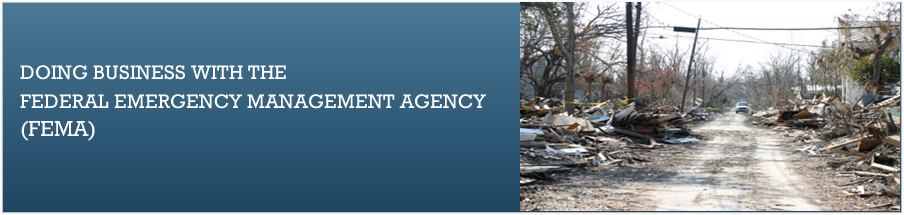
HARRISBURG, Pa. — The Public Assistance program is for infrastructure recovery. The Federal Emergency Management Agency (FEMA) emphasizes the differences between the Individual Assistance and Public Assistance programs. Unlike Individual Assistance, through which individuals and households may apply for federal funding to help recover from disasters, Public Assistance provides funding for eligible projects to recover elements of the infrastructure. As an example, damaged public roads, bridges, culverts are elements of the infrastructure.  

Through the Public Assistance program, FEMA provides supplemental federal disaster grant assistance for debris removal, emergency protective measures, and the repair, replacement, or restoration of disaster-damaged, publicly owned facilities and the facilities of certain private nonprofit organizations. The Public Assistance program also encourages protection of these damaged facilities from future events by providing assistance for hazard mitigation measures during the recovery process.

Applicants for Public Assistance typically include organizations that provide public service, such as municipalities, townships and school districts. Other applicants might include volunteer fire fighter organizations; sewer authorities; emergency management offices; and regional police departments.

Public Assistance funding may cover costs incurred to return elements of the infrastructure to as close to their pre-disaster condition as possible.

Expenses may include costs for work such as debris removal and repair or replacement of damaged roads, bridges and other public components.

FEMA Public Assistance specialists work closely with individual applicants to review specifics of each project to determine which expenses may be covered.

For a list of frequently asked questions about the federal Public Assistance process, see: http://www.fema.gov/public-assistance-frequently-asked-questions.

FEMA’s mission is to support our citizens and first responders to ensure that as a nation we work together to build, sustain, and improve our capability to prepare for, protect against, respond to, recover from, and mitigate all hazards. FEMA Region III’s jurisdiction includes Delaware, the District of Columbia, Maryland, Pennsylvania, Virginia and West Virginia.  Stay informed of FEMA’s activities online: videos and podcasts are available at http://www.fema.gov/medialibrary and www.youtube.com/fema. Follow us on Twitter at www.twitter.com/femaregion3.


Original article: 
Public Assistance is For Infrastructure Recovery

NEW YORK – A Disaster Recovery Center is moving to a new location. Another center is ending service.

The center at the Lindenhurst Memorial Library, 1 Lee Avenue in Lindenhurst, NY, 11757, will end service at that location at 3 p.m. Saturday, Feb. 23, and will reopen at 9 a.m. Tuesday, Feb. 26, 2013 at the Copiague Memorial Public Library, 50 Deauville Blvd., Copiague, NY, 11726.

The center’s hours are 9 a.m. to 6 p.m. Monday through Friday and 9 a.m. to 3 p.m. Saturday.

The recovery center at the storefront at 1001 Beach 20th St., Far Rockaway, Queens, NY, 11691, will end service at 3 p.m. Saturday, Feb. 23, 2013.

The State of New York and the Federal Emergency Management Agency closely monitor visitor traffic at all New York recovery centers. Traffic at the two centers has slowed, indicating the information needs of survivors in those areas have mostly been met. So far, there have been more than 14,000 visits to the two centers.

Survivors who need help may still visit any of the other centers that remain open throughout New York, 9 a.m. to 6 p.m. Monday through Friday and 9 a.m. to 3 p.m. Saturday.

To find the nearest center, the following options are available:

  • Text DRC and a Zip Code to 43362 (4FEMA), and a text message will be sent back with the address.

Individuals also can find a recovery center – and register for FEMA help – online at www.DisasterAssistance.gov or via smartphone or tablet by going to m.fema.gov or by downloading the FEMA app.

Survivors who have questions or want to register with FEMA can also call 800-621-3362 (Voice, 7-1-1/Relay) or (TTY) 800-462-7585. The toll-free telephone numbers operate 7 a.m. to 1 a.m. EST, seven days a week until further notice.

Hurricane Sandy survivors in New York have until Feb. 27, 2013, to register for federal disaster assistance, which can include money for rent, essential home repairs, personal property losses and other serious disaster-related needs not covered by insurance.

For more information on New York’s disaster recovery, visit www.fema.gov/SandyNY, www.twitter.com/FEMASandy, www.facebook.com/FEMASandy and www.fema.gov/blog.

This article – 

A Disaster Recovery Center in NY relocates and another ceases operation

DENTON, Texas – Residents and business owners in Haltom City, Texas can now enjoy a reduction in flood insurance premiums because of the city’s active participation in the National Flood Insurance Program’s (NFIP) Community Rating System (CRS). In addition to lower premiums, the CRS program helps to reduce the threat of damage due to flooding.

“The flood insurance program rewards communities for implementing programs and policies that protect their residents from flooding,” said Tony Robinson, the Federal Emergency Management Agency (FEMA) R6 regional administrator. “By joining this program, Haltom City’s higher regulatory standards, public education outreach, and other initiatives, have earned the city lower premiums as a CRS Class 7 Community.”

Haltom City flood insurance policyholders who reside in Special Flood Hazard Areas will receive a 15 percent reduction on flood insurance premiums and policyholders located outside Special Flood Hazard Areas will enjoy a 5 percent discount. The reduction in flood insurance premiums represents an annual savings in premium costs for Haltom City’s policy holders and will take effect at the time a new policy is written or an effective policy is renewed.

The city’s flood plain management staff has worked hard to insure that Haltom City’s participation in the program pays off. In addition to the reduction in insurance premiums, local officials are more knowledgeable about floodplain management and its residents are more knowledgeable about mitigation and flood insurance.

The program helps to make Haltom City a safer place to live, reduces the economic impact of flood hazards and saves citizens money on flood policy premiums.

The Community Rating System (CRS) is a voluntary program for NFIP- participating communities. The intended goals of the program are to reduce flood losses; facilitate accurate insurance ratings; and to promote the awareness of flood insurance. For more information on the NFIP’s CRS program, go to http://www.fema.gov/business/nfip/crs.shtm.

###

FEMA’s mission is to support our citizens and first responders to ensure that as a nation we work together to build, sustain, and improve our capability to prepare for, protect against, respond to, recover from, and mitigate all hazards.   Follow us on Twitter at www.twitter.com/femaregion6  and the FEMA Blog at http://blog.fema.gov.


Original source: 

FEMA Welcomes Haltom City, Texas to the Community Rating System

DENTON, Texas – Residents, business and residential renters, and business owners in Deer Park, Texas can now enjoy a 5 to 10 percent reduction in flood insurance premiums because of the city’s active participation in the National Flood Insurance Program’s (NFIP) Community Rating System (CRS).

This means those policyholders who reside in Special Flood Hazard Areas (SFHA) will receive a 10 percent reduction on flood insurance premiums, and policyholders located outside the SFHA will enjoy a 5 percent discount.

In addition to lower premiums, the rating program helps to reduce the threat of damage from flooding, according to officials with the Federal Emergency Management Agency (FEMA). “The flood insurance program rewards communities for implementing programs and policies that protect their residents from flooding,” said FEMA Region 6 Administrator Tony Robinson. “Deer Park’s higher regulatory standards, public education outreach, property acquisition programs and open space preservation initiatives, among other activities, have earned the parish lower premiums as a CRS Class 8 Community.”

The reduction in flood insurance premiums represents an annual savings in premium costs for Deer Park policy holders and will take effect at the time a new policy is written or an effective policy is renewed. Those individuals and business owners with a Preferred Risk Policy will not receive premium rate credits under the CRS because it already has a lower premium than other policies.

Since joining CRS in 2000, the city’s participation in the program has been beneficial in many respects. In addition to the reduction in insurance premiums, local officials are more knowledgeable about floodplain management and residents are more knowledgeable about mitigation and flood insurance.    The CRS program has helped make Deer Park a safer place to live, reduced the economic impact of flood hazards and saved their citizens money on flood policy premiums.

CRS is a voluntary program for National Flood Insurance Program (NFIP)-participating communities. The intended goals of the CRS are to reduce flood losses; facilitate accurate insurance ratings; and to promote the awareness of flood insurance.  For more information on the NFIP’s CRS program, visit www.fema.gov/business/nfip/crs.shtm.

###

FEMA’s mission is to support our citizens and first responders to ensure that as a nation we work together to build, sustain, and improve our capability to prepare for, protect against, respond to, recover from, and mitigate all hazards.   Follow us on Twitter at www.twitter.com/femaregion6  and the FEMA Blog at http://blog.fema.gov.

Visit source:  

Deer Park, Texas Celebrates a Safer Community

NEW YORK – Survivors with home accessibility needs because of Hurricane Sandy, especially older adults and people with disabilities, are encouraged to stay in touch with the Federal Emergency Management Agency. FEMA may be able to assist if elevators or electricity are not working properly, even if the structure did not sustain damage.

Residents living in buildings with non-working elevators or inaccessible common areas may be eligible for temporary rental assistance or other disaster-related assistance from FEMA. Those experiencing accessibility issues while waiting for an insurance settlement also may be eligible for assistance.

Buildings with unsafe conditions such as electrical problems in common areas, non-working elevators and hard-to-access entrances may present difficulties to residents, especially those with disabilities or health concerns that make it difficult to use the stairs.

FEMA specialists are canvassing neighborhoods impacted by Hurricane Sandy to ensure survivors with physical or mobility needs have equal access and receive equal benefits from FEMA programs. They will work on a case-by-case basis to assist survivors with access and functional needs to ensure they receive the assistance for which they are eligible.

While FEMA will continue outreach efforts, survivors are urged to call the FEMA helpline 800-621-3362 (Voice, 7-1-1/Relay) or TTY 800-462-7585. Call centers are available 7:00 a.m. to 1:00 a.m. EST, seven days a week.

Originally from – 

Sandy survivors with home accessibility needs should contact FEMA

TRENTON, N.J. — Just two weeks remain for Hurricane Sandy survivors in New Jersey to register for potential recovery assistance with the Federal Emergency Management Agency. The deadline is Friday, March 1 at 10 p.m. local time by phone and at midnight for those who register online.

March 1 is also the deadline to return applications to the U.S. Small Business Administration for low-interest disaster loans, which is the primary source of federal funds for long-term rebuilding. The quickest way to apply for an SBA disaster home or business loan is filling out an online application at https://disasterloan.sba.gov/ela.

New Jerseyans who applied for federal disaster assistance are urged to stay in touch with FEMA and SBA. Applicants can track their claims and should notify FEMA and SBA of changes to their mailing addresses, phone numbers or email addresses.

To date, more than $358.1 million in grants has been approved for home repairs or replacement, rental assistance and other needs. Another $446.7 million in SBA low-interest disaster loans has been approved for more than 6,400 homes and businesses.

Survivors can register online at www.DisasterAssistance.gov, via web-enabled phone or tablet at m.fema.gov until midnight March 1. New Jerseyans can also register by telephone until 10 p.m. March 1 via FEMA’s toll-free numbers: 1-800-621-3362 or TTY 1-800-462-7585. Those who use 711-Relay or Video Relay Services can call 1-800-621-3362. Recovery assistants remain available from 7 a.m. to 10 p.m. daily.

FEMA’s mission is to support our citizens and first responders to ensure that as a nation we work together to build, sustain, and improve our capability to prepare for, protect against, respond to, recover from, and mitigate all hazards.

Follow FEMA online at www.fema.gov/blog, www.twitter.com/fema, www.facebook.com/fema, and www.youtube.com/fema. Also, follow Administrator Craig Fugate’s activities at www.twitter.com/craigatfema

The social media links provided are for reference only. FEMA does not endorse any non-government websites, companies or applications.

Link to article – 

Two Weeks Left For Survivors To Register For Disaster Assistance In New Jersey

Following is a summary of key federal disaster aid programs that can be made available as needed and warranted under President Obama’s major disaster declaration issued for Mississippi.

Assistance for Affected Individuals and Families Can Include as Required:

  • Rental payments for temporary housing for those whose homes are unlivable.  Initial assistance may be provided for up to three months for homeowners and at least one month for renters.  Assistance may be extended if requested after the initial period based on a review of individual applicant requirements.  (Source: FEMA funded and administered.)
  • Grants for home repairs and replacement of essential household items not covered by insurance to make damaged dwellings safe, sanitary and functional.  (Source: FEMA funded and administered.)
  • Grants to replace personal property and help meet medical, dental, funeral, transportation and other serious disaster-related needs not covered by insurance or other federal, state and charitable aid programs.   (Source: FEMA funded at 75 percent of total eligible costs; 25 percent funded by the state.)
  • Unemployment payments up to 26 weeks for workers who temporarily lost jobs because of the disaster and who do not qualify for state benefits, such as self-employed individuals.  (Source: FEMA funded; state administered.)
  • Low-interest loans to cover residential losses not fully compensated by insurance.  Loans available up to $200,000 for primary residence; $40,000 for personal property, including renter losses.  Loans available up to $2 million for business property losses not fully compensated by insurance.  (Source: U.S. Small Business Administration.)
  • Loans up to $2 million for small businesses, small agricultural cooperatives and most private, non-profit organizations of all sizes that have suffered disaster-related cash flow problems and need funds for working capital to recover from the disaster’s adverse economic impact.  This loan in combination with a property loss loan cannot exceed a total of $2 million. (Source: U.S. Small Business Administration.)
  • Loans up to $500,000 for farmers, ranchers and aquaculture operators to cover production and property losses, excluding primary residence.  (Source: Farm Service Agency, U.S. Dept. of Agriculture.)
  • Other relief programs: Crisis counseling for those traumatized by the disaster; income tax assistance for filing casualty losses; advisory assistance for legal, veterans benefits and social security matters.

Assistance for the State, Tribal and Affected Local Governments Can Include as Required:

  • Payment of not less than 75 percent of the eligible costs for removing debris from public areas and for emergency measures, including direct federal assistance, taken to save lives and protect property and public health.  (Source: FEMA funded, state administered.)
     
  • Payment of not less than 75 percent of the eligible costs for repairing or replacing damaged public facilities, such as roads, bridges, utilities, buildings, schools, recreational areas and similar publicly owned property, as well as certain private non-profit organizations engaged in community service activities. (Source: FEMA funded, state administered.)
  • Payment of not more than 75 percent of the approved costs for hazard mitigation projects undertaken by commonwealth and local governments to prevent or reduce long-term risk to life and property from natural or technological disasters.  (Source: FEMA funded, state administered.)

How to Apply for Assistance:

  • Those in the counties designated for assistance to affected residents and business owners can begin the disaster application process by registering online at www.DisasterAssistance.gov, by web enabled mobile device at m.fema.gov or by calling 1-800-621-FEMA (3362). Disaster assistance applicants, who have a speech disability or hearing loss and use TTY, should call 1-800-462-7585 directly; for those who use 711 or Video Relay Service (VRS), call 1-800-621-3362. The toll-free telephone numbers are available from 7 a.m. to 10 p.m. (local time) Monday through Sunday until further notice.  Applicants registering for aid should be prepared to provide basic information about themselves (name, permanent address, phone number), insurance coverage and any other information to help substantiate losses.
  • Application procedures for local and state governments will be explained at a series of federal/state applicant briefings with locations to be announced in the affected area by recovery officials. Approved mitigation projects are paid through the state from funding provided by FEMA and other participating federal agencies.

FEMA’s mission is to support our citizens and first responders to ensure that as a nation we work together to build, sustain, and improve our capability to prepare for, protect against, respond to, recover from, and mitigate all hazards.

Follow FEMA online at www.fema.gov/blog, www.twitter.com/fema, www.facebook.com/fema, and www.youtube.com/fema.  Also, follow Administrator Craig Fugate’s activities at www.twitter.com/craigatfema

The social media links provided are for reference only. FEMA does not endorse any non-government websites, companies or applications.


Link: 

Federal Aid Programs for State of Mississippi Disaster Recovery

NEW YORK – More than 500 residents from New York City’s five boroughs and Long Island have been hired by FEMA in the aftermath of Hurricane Sandy.

Within the first weeks of the storm, FEMA deployed nearly 3,800 reservists from all over the country. These reservists came from every walk of life and professional background. For example, in External Affairs, a former TV broadcaster from Tennessee may work alongside a retired Navy public affairs officer from Missouri.

As some of the reservists begin to return home, FEMA’s practice on large-scale disasters is to hire some of its workforce from the local community. These are full-time, temporary positions.

Sometimes there is a misconception that FEMA only hires local people who have been affected by the disaster, but that is not the case. The agency hires people based on experience and qualifications.

Those hired work in a range of departments and positions.

While local hires often have a sense of mission working for the agency, FEMA benefits from their cultural and geographic knowledge. In the Brighton Beach area of Brooklyn, where many in the Russian-Jewish population have a limited proficiency in English, FEMA has benefited from hiring several employees from the community.

Another advantage to FEMA is that many local hires go on to have a successful career in emergency management. Some even go all the way to the top. Justo Hernandez started as a housing inspector for the agency in 1989 during Hurricane Hugo and went on to become a Federal Coordinating Officer, which is the top federal executive position in a disaster operation.

To learn more about Hurricane Sandy recovery efforts in New York, visit www.FEMA.gov/SandyNY.

FEMA’s mission is to support our citizens and first responders to ensure that as a nation we work together to build, sustain, and improve our capability to prepare for, protect against, respond to, recover from, and mitigate all hazards.

Recovery assistance is available without regard to race, color, religion, nationality, sex, age, disability, English proficiency or economic status. If you or someone you know has been discriminated against, call FEMA toll-free at 800-621-FEMA (3362). For TTY call 800-462-7585.

Taken from – 

FEMA hires 500 New York residents for recovery operation

DENTON, Texas –Homeowners, renters and business owners in Matagorda County, Texas are encouraged to look over newly released preliminary flood maps in order to determine their flood risks and make informed decisions.

Matagorda County officials and the Federal Emergency Management Agency (FEMA) are presenting the preliminary maps to communities and unincorporated areas in order to help leaders and residents identify known flood risks and use that information to make decisions about buying flood insurance and how the community should move forward with any development.

The Texas-based coastal flood mapping effort follows the release of a new, comprehensive storm surge study that gives updated information on coastal flood risks. To share that data, a public workshop is scheduled in the county where interested citizens can obtain more information about the proposed changes.

Thursday, Feb. 21                                          

Bay City Civic Center                  

201 7th Street                        

Bay City, TX 77414                                             

2 p.m. – 8 p.m.                                                                  

“As we work together with our state and local partners to bring this critical information to the county, we ask that everyone review the maps to understand what flood risks are involved,” said FEMA R6 Administrator Tony Robinson. “The role of the community as an active partner in the flood mapping process is very important.”

Additional information is available, including links to the interactive mapping website on www.txchart.com. Residents can also contact the Matagorda County Floodplain Administrator for more details.

###

FEMA’s mission is to support our citizens and first responders to ensure that as a nation we work together to build, sustain, and improve our capability to prepare for, protect against, respond to, recover from, and mitigate all hazards.    Follow us on Twitter at www.twitter.com/femaregion6 and the FEMA Blog at http://blog.fema.gov.


Original post – 

Preliminary Flood Maps in Matagorda Co, TX Ready for Public View: Public Open House Scheduled to Share Map Changes and Flood Risk Information

DENTON, Texas –Homeowners, renters and business owners in Galveston County, Texas are encouraged to look over newly released preliminary flood maps in order to determine their flood risks and make informed decisions.

Galveston County officials and the Federal Emergency Management Agency (FEMA) are presenting the preliminary maps to communities and unincorporated areas in order to help leaders and residents identify known flood risks and use that information to make decisions about buying flood insurance and how the community should move forward with any development.

The Texas-based coastal flood mapping effort follows the release of a new, comprehensive storm surge study that gives updated information on coastal flood risks. To share that data, public workshops are scheduled in the county where interested citizens can obtain more information about the proposed changes.

Tuesday, Feb. 19                                           Wednesday, Feb. 20  

Moody United Methodist Church                      League City Civic Center

2803 53rd Street                                              400 W. Walker Street

Galveston, TX 77551                                      League City, TX 77573

2 p.m. – 8 p.m.                                                2 p.m. – 8 p.m.

“As we work together with our state and local partners to bring this critical information to the county, we ask that everyone review the maps to understand what flood risks are involved,” said FEMA R6 Regional Administrator Tony Robinson. “The role of the community as an active partner in the flood mapping process is very important.”

Additional information is available, including links to the interactive mapping website on www.txchart.com. Residents can also contact the Galveston County Floodplain Administrator for more details.

###

FEMA’s mission is to support our citizens and first responders to ensure that as a nation we work together to build, sustain, and improve our capability to prepare for, protect against, respond to, recover from, and mitigate all hazards.    Follow us on Twitter at www.twitter.com/femaregion6 and the FEMA Blog at http://blog.fema.gov.


More: 

Preliminary Flood Maps in Galveston Co, TX Ready for Public View: Public Open House Scheduled to Share Map Changes and Flood Risk Information

 Page 73 of 105  « First  ... « 71  72  73  74  75 » ...  Last »