
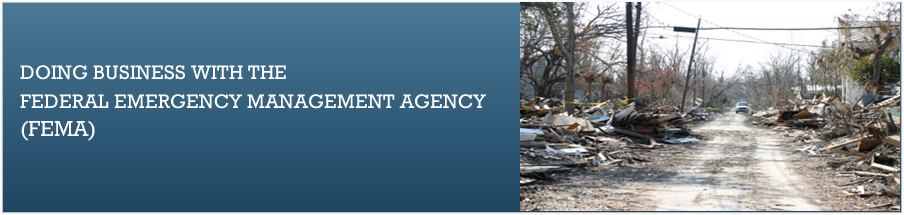
TRENTON, N.J. — Hurricane Sandy survivors who had storm-related damages in New Jersey have just two weeks left to register with the Federal Emergency Management Agency. Federal disaster assistance applications are due by Monday, April 1.

April 1 is also the deadline to return applications to the U.S. Small Business Administration for low-interest disaster loans, which is the primary source of federal funds for long-term rebuilding. Survivors can apply for an SBA disaster home or business loans by filling out an online application at DisasterLoan.SBA.gov/ela.                                                               

Survivors who applied for federal disaster assistance are urged to stay in touch with FEMA and SBA. Applicants should notify FEMA and SBA of changes to their mailing addresses, phone numbers or email addresses.

Survivors can register online and check on the status of their applications at DisasterAssistance.gov, via smartphone or tablet at m.fema.gov. They also can call 800-621-3362 or TTY 800-462-7585. Those who use 711-Relay or Video Relay Services can call 800-621-3362. Recovery assistants remain available daily from 7 a.m. to 10 p.m.

There are nine disaster recovery centers open in Atlantic, Cape May, Hudson, Monmouth and Ocean counties. FEMA staff is available at the centers to provide clarification to letters, assist survivors with finding a temporary home if their primary residence was damaged or destroyed, check on the status of applications for assistance or refer survivors to other agencies that may provide additional help. Survivors can locate their nearest center by going to FEMA.gov/DRC.       

Survivors can ask questions about their SBA disaster home or business loan applications by calling 800-659-2955 or TTY 800-877-8339 or emailing disastercustomerservice@sba.gov.

Additional resources are available online at FEMA.gov/SandyNJ and SBA.gov/Sandy.

FEMA’s mission is to support our citizens and first responders to ensure that as a nation we work together to build, sustain, and improve our capability to prepare for, protect against, respond to, recover from, and mitigate all hazards.

Follow FEMA online at www.fema.gov/blog, www.twitter.com/fema, www.facebook.com/fema, and www.youtube.com/fema. Also, follow Administrator Craig Fugate’s activities at www.twitter.com/craigatfema

The social media links provided are for reference only. FEMA does not endorse any non-government websites, companies or applications.

Link:  
Two Weeks Left To Register For Federal Disaster Assistance

TRENTON, N.J. — Disaster recovery officials urge recipients of federal grants to use the money wisely.

Upon releasing the funds by direct deposit or check, the Federal Emergency Management Agency sent every recipient a letter providing important information about the grant and outlining how the money can be spent.

Disaster-related grants are for repairs, temporary housing and other approved disaster-related costs. New Jerseyans who have questions about their grants should call FEMA’s Helpline at  800-621-FEMA (3362).

Housing funds may be used for:

  • Repairs to return a home to a safe and functional condition – may include repairs to windows, doors, water and ventilation systems, or other structural parts of a home
  •  Replacement or rebuilding of a disaster-damaged home
  •  Reimbursement for lodging expenses directly related to the disaster – receipts for these expenses will be requested if the house sustained damages.
  • Rental assistance – applicants who must remain in temporary housing for a longer period than the initial assistance grant covers may request more assistance until their home can be occupied or other permanent housing arrangements can be made. Disaster-related grant recipients also must turn in proper receipts to receive further assistance.

Recipients of Other Needs Assistance may use the funds for:

  • Personal property, specialized tools for employment, household items, appliances and vehicle repair or replacement
  • Medical, dental and funeral expenses and moving expenses

Disaster-related grant recipients are required to sign a declaration and a release certifying that all funds will be spent on the expenses for which they are intended.

Applicants also should be sure to update their address and phone number information by calling 800-621-FEMA (3362) or TTY 800-462-7585 from 7 a.m. to 10 p.m. or update your information online at www.DisasterAssistance.gov. Assistance is available in many languages. Those who use 711 or Video Relay Service should call 800-621-3362.

If FEMA does not have the correct contact information, applicants may miss important letters or phone calls about their applications for assistance or payment status.

By law, FEMA grants, which are taxpayer dollars, cannot duplicate payments from other sources. For example, if a grant recipient receives an insurance settlement covering expenses already paid for by FEMA, those duplicated funds must be reimbursed to FEMA.

FEMA’s mission is to support our citizens and first responders to ensure that as a nation we work together to build, sustain, and improve our capability to prepare for, protect against, respond to, recover from, and mitigate all hazards.

Follow FEMA online at www.fema.gov/blog, www.twitter.com/fema, www.facebook.com/fema, and www.youtube.com/fema. Also, follow Administrator Craig Fugate’s activities at www.twitter.com/craigatfema

The social media links provided are for reference only. FEMA does not endorse any non-government websites, companies or applications.

Source: 

Use Disaster Grants Wisely

TRENTON, N.J. — Here is some helpful information New Jerseyans should know as they continue their recoveries from Hurricane Sandy.

  • There are three ways to reach the Federal Emergency Management Agency in New Jersey:
  • Survivors should apply for federal disaster assistance even if they have insurance. Assistance may pay for repairs and temporary housing that insurance doesn’t cover.
  • The deadline to register with FEMA and return completed SBA loan applications is Monday, April 1.
  • Federal disaster assistance can include rental assistance, grants to replace personal property or low-interest disaster home loans from the Small Business Administration.
  • Renters and homeowners can apply.
  • Only a survivor whose primary residence was damaged and was living in it at the time of the storm is eligible to receive assistance for housing needs.
  • FEMA disaster assistance is not income sensitive. Income does not affect eligibility.
  • FEMA disaster assistance does not affect other government programs like Medicare, Social Security, Medicaid, Supplemental Security Income, Temporary Assistance for Needy Families or pensions.
  • Accepting disaster assistance does not keep other survivors from receiving it.
  • Disaster assistance from FEMA is not taxable.
  • Non U.S. citizens may be eligible for FEMA assistance if they are lawful permanent residents or otherwise have legal status.
  • Registering with the American Red Cross or calling 2-1-1 is not the same as registering with FEMA. Survivors must register with FEMA to be considered for federal disaster assistance.
  • The U.S. Small Business Administration offers low-interest disaster home loans to homeowners and renters to repair or replace disaster-damaged property. SBA also offers loans to businesses to repair and replace disaster-damaged property and offers economic injury disaster loans to assist with working capital.
  • The SBA can be contacted by calling 800-659-2955 or TTY 800-877-8339 or emailing disastercustomerservice@sba.gov.
  • Survivors who have questions about flood insurance claims and the appeals process can call 888-379-9531.
  • Visit Region2Coastal.com for information about advisory base flood elevations.

FEMA’s mission is to support our citizens and first responders to ensure that as a nation we work together to build, sustain, and improve our capability to prepare for, protect against, respond to, recover from, and mitigate all hazards.

Follow FEMA online at www.fema.gov/blog, www.twitter.com/fema, www.facebook.com/fema, and www.youtube.com/fema. Also, follow Administrator Craig Fugate’s activities at www.twitter.com/craigatfema

The social media links provided are for reference only. FEMA does not endorse any non-government websites, companies or applications.

Source:  

Things New Jersey Hurricane Sandy Survivors Should Know

SAN JUAN, PR – They are young, enthusiastic and prepared to respond to, recover from and mitigate all hazards in their school and communities. A few weeks ago a group of teenagers in Humacao, led by Gabriela Rodriguez-Boria, completed their Community Emergency Response Team (CERT) training as part of Gabriela’s project as the Federal Emergency Management Agency (FEMA) Region II Youth Council Representative.

While seeking opportunities to prepare youngsters to be ready before and after a disaster strikes, Gabriela’s project includes CERT training for teenagers. CERT is a program that educates people about disaster preparedness for hazards that may impact their area and trains them in basic disaster response skills, such as fire safety, light search and rescue, team organization, and disaster medical operations. With a solid commitment to encourage that generations are better aware of emergency preparedness, FEMA counts on programs, such as CERT and projects like Gabriela’s to help communities become smarter and more resilient sooner.

“As we prepare our plans, we have to keep in mind the importance of including younger audiences in the process. Youngsters have a significant influence on their peers and families, and we see Gabriela and her project as a good example. She drives this preparedness message further on,” said FEMA’s Caribbean Area Division Director, Alejandro De La Campa.

Thirteen-year old Gabriela, organized a CERT of approximately 15-20 students at the school she attends, the Colegio Nuestra Señora del Perpetuo Socorro in Humacao. Her parents and this private school have been very supportive and involved in Gabriela’s activities to the point of completing various emergency preparedness courses.

“We are organizing a Preparedness Day at our school and plan to replicate the Teen CERT training in other schools in neighboring communities.  We can get our schools, neighbors, churches, families and friends involved in similar activities so they can learn surviving techniques for future emergencies. This is my goal,” said Gabriela, who represents FEMA Region II in the Youth Preparedness Council. Puerto Rico is one of the jurisdictions under this Region, which also includes New York, New Jersey and the US Virgin Islands. 

This week, March 3-9, the National Oceanic and Atmospheric Administration (NOAA) and FEMA have partnered again for the National Severe Weather Preparedness Week, futhering the readiness message and encouraging every one in our communities to get better prepared for severe weather events.  Gabriela’s project represents an innovative and personal approach to improve emergency preparedness in her community.

There is additional information about Gabriela’s project and the Youth Council at www.citizencorps.gov/getstarted/youth/youthindex. If you are interested in becoming a CERT member, locate the nearest CERT team or check for upcoming training opportunities, visit www.citizencorps.gov/cert. Learn more about emergency preparedness and how to improve your community resiliency to emergency situations by visiting www.fema.gov, www.weather.gov or www.ready.gov.

FEMA News Desk (787) 296-3554, 3560

###


FEMA’s mission is to support our citizens and first responders to ensure that as a nation we work together to build, sustain, and improve our capability to prepare for, protect against, respond to, recover from, and mitigate all hazards.

Visit source:

In Route to Be Better Prepared

SAN JUAN, PR – Every year approximately 800 seismic events occur in the Puerto Rico region. While some of them are imperceptible, others remind us of the urgency to prepare ourselves better to survive no notice emergencies, such as earthquakes and tsunamis. The Federal Emergency Management Agency (FEMA) emphasizes the role of prepared communities that become stronger and smarter by planning and practicing what to do to survive and recover faster from this type of events.

This week FEMA joins efforts with the Puerto Rico Emergency Management Agency, the Puerto Rico Seismic Network, the Puerto Rico Broadcasters Association and the National Oceanographic and Atmospheric Agency (NOAA) through LANTEX 2013, an exercise that will take place this Wednesday, March 20, 2013. This drill will test the Emergency Alert System (EAS) during an earthquake/tsunami event and the communications and response processes of local, state and federal governments, as well as the private sector during an activation of this kind.

“A destructive earthquake can occur anytime and once it happens, it’s too late to prepare ourselves. We encourage everyone in our communities to be ready NOW as you might not be with your family, your children might be at school or you could be at work,” said FEMA’s Caribbean Area Division Director Alejandro De La Campa. “This exercise provides everyone with a great opportunity to practice their emergency plans and become involved in their emergency preparedness.”

A great first step to include in your emergency plan is to look for information about emergency plans in places where you and your family spend time: work, daycare and school. If no plan exists, the following simple steps can help you begin developing your family emergency communications plan:

  • Identify an out-of town contact.  It may be easier to make a long-distance phone call than to call across town, so an out-of-town contact may be in a better position to communicate among separated family members.
  • Be sure every member of your family knows the phone number and has a cell phone, coins, or a prepaid phone card to call the emergency contact. If you have a cell phone, program that person(s) as “ICE” (In Case of Emergency) in your phone. If you are in an accident, emergency personnel will often check your ICE listings in order to get a hold of someone you know. Make sure to tell your family and friends that you’ve listed them as emergency contacts.
  • Teach family members how to use text messaging (also known as SMS or Short Message Service). Text messages can often get around network disruptions when a phone call might not be able to get through.

In addition to being aware of your risks, learn what to do during diverse emergency situations.  Here are a few tips to remember:

When an earthquake hits:

  • DROP to the ground;
  • Take COVER by getting under a sturdy desk, table or other piece of furniture. If there is none around to get under, get down near an interior wall and cover your head and neck with your arms and hands; and
  • HOLD ON to the furniture or to your head and neck until the shaking stops.  

Pay attention to some of these tsunami warning signs:

  • A strong earthquake, or one that lasts for 20 seconds or longer
  • The ocean withdraws or rises rapidly
  • A loud, roaring sound (like an airplane or a train) coming from the ocean
  • Tsunami warnings broadcast over television and radio, by beach lifeguards, community sirens, text message alerts, National Weather Service tsunami warning center Web sites and on NOAA Weather Radio All Hazards

When a tsunami hits:

  • Keep calm;
  • Immediately move to the local tsunami shelter using defined tsunami evacuation routes.
  • If there are no evacuation routes defined, move to higher ground that is at least 100 feet in elevation, a mile inland, or to the highest floor of a sturdy building and STAY there.
  • If you are already in a safe location, STAY there.
  • Move by foot when possible – do not drive – this keeps the roads unobstructed for emergency vehicles.
  • Stay tuned to NOAA Weather Radio or news broadcasts for changes in tsunami alerts.
  • Stay away from the coast and low-lying areas until local officials say it’s safe to return.


For more information on earthquake safety, including what to do before, during, and after an earthquake and how to check for earthquake hazards, visit http://www.fema.gov/hazard/earthquake/. Further information regarding tsunami safety, evacuation, safe relocation and the tsunami ready program is available at www.tsunami.gov and http://prsn.upr.edu.  For emergency planning information and how to put together an emergency kit and other preparedness initiatives to be ready for disasters, visit www.ready.gov.

FEMA News Desk (787) 296-3554, 3560


###

FEMA’s mission is to support our citizens and first responders to ensure that as a nation we work together to build, sustain, and improve our capability to prepare for, protect against, respond to, recover from, and mitigate all hazards.

See original:

Earthquakes and Tsunamis: The Time to Get Ready is Now

NEW YORK – New York renters may be eligible for additional grants from the Federal Emergency Management Agency. To find out if renters qualify, they must complete and submit their disaster loan application from the U.S. Small Business Administration.

No one has to accept an SBA disaster loan. But information provided on that loan application may be used to help determine eligibility for a variety of FEMA programs that can help renters rebuild their lives.

“Renters are tightly woven into the fabric of New York and their recovery is crucial to the city’s recovery,” said Michael F. Byrne, FEMA’s federal coordinating officer in New York. “Many  renters have registered with FEMA and many of them are receiving help now.”

Renters, like homeowners, may be eligible for FEMA’s Other Needs Assistance, designed to help survivors with uninsured or underinsured necessary expenses and serious needs caused by the disaster. It’s important for survivors to understand that they must complete and return their SBA loan application in order to be eligible for Other Needs Assistance grants.

These grants can be used for:

  • Replacement or repair of necessary personal property lost or damaged in the disaster, household items such as room furnishings or appliances, and tools and equipment required by the self-employed for their jobs
  • Primary vehicles and approved second vehicles damaged by the disaster
  • Disaster-related medical and dental expenses
  • Disaster-related funeral and burial expenses

Renters who do want an SBA loan may be eligible for a loan up to $40,000 for personal property losses.

The deadline to apply for FEMA assistance or an SBA disaster loan is March 29, 2013.

A simple way to complete the application is online, using the SBA’s electronic loan application. Go to https://DisasterLoan.SBA.gov/ELA. More information is available by calling the SBA Disaster Customer Service Center toll-free number, 800-659-2955 (TTY 800-877-8339). Assistance is also available by sending an email to DisasterCustomerService@sba.gov or by visiting sba.gov.

Individuals can register with FEMA online at DisasterAssistance.gov or via smartphone or tablet at m.fema.gov. Applicants may also call 800-621-3362 (Voice, 7-1-1/Relay) or TTY 800-462-7585. The phone lines operate 7 a.m. to 10 p.m. EDT, seven days a week.

Continue reading here:  

Renters should complete and submit SBA applications

DENTON, Texas –   The Region 6 office of the Federal Emergency Management Agency (FEMA) is joining its federal, state and local partners in Arkansas, Louisiana, New Mexico, Oklahoma and Texas to commemorate Flood Safety Awareness Week from March 18-22, 2013.  

The week-long campaign provides an opportunity for emergency management experts to work together in sharing information about the dangers related to flooding, how to prepare for flood events and ways to prevent future damage from floods.

“Flooding is the nation’s number one natural disaster and it can happen in any of our regional states,” said FEMA Region 6 Administrator Tony Robinson.  “We encourage homeowners, renters and business owners to find out if their home or business is at risk for flood and then take steps to address that risk.”

Before a Flood

  • Avoid building in a floodplain unless you elevate and reinforce your home.
  • Elevate the furnace, water heater and electric panel if susceptible to flooding.
  • Build an emergency kit and make a family communications plan.

During a Flood

  • Listen to local officials and monitor your local radio or television for information.
  • Be aware that flash flooding can occur. If it does, move immediately to higher ground.  
  • Be aware of streams, drainage channels, canyons and other areas known to flood suddenly.
  • Do not drive into flooded areas. Turn Around; Don’t Drown. Two feet of rushing water can carry away most vehicles.

After a Flood

  • Avoid floodwaters; water may be contaminated by oil, gasoline or raw sewage. Water may also be electrically charged from underground or downed power lines.
  • Be aware of areas where floodwaters have receded. Roads may have weakened.
  • Return home only when authorities indicate it is safe.

Find more information on flooding, flood hazards, and flood insurance at www.floodsmart.gov, http://www.ready.gov/floods and www.nws.noaa.gov/floodsafety/.

###

FEMA’s mission is to support our citizens and first responders to ensure that as a nation we work together to build, sustain, and improve our capability to prepare for, protect against, respond to, recover from, and mitigate all hazards.    Follow us on Twitter at www.twitter.com/femaregion6 and the FEMA Blog at http://blog.fema.gov.

See original:  

March 18-22 is Flood Safety Awareness Week. Do You Know Your Flood Hazards?

PURVIS, Miss. – The Disaster Recovery Center in Lamar Park at 226 Pinewood Dr. will close Friday, March 15, at 6 p.m., according to the Mississippi Emergency Management Agency and the Federal Emergency Management Agency. 

One other DRC in Mississippi will remain open at the Ben McNair Recreation Center, 300 North 12th Avenue in Hattiesburg. People who are unable to visit the Lamar Park facility before it closes can talk to disaster specialists at the Ben McNair center from 8 a.m. to 6 p.m. Monday through Saturday until further notice.

At the DRC, applicants and others with questions about disaster recovery can meet face-to-face with state and federal specialists who can provide information and answer questions about storm-related assistance. Also on hand at the DRC are representatives from the US Small Business Administration who can help survivors understand and complete applications for low-interest disaster loans.

For those unable to visit the centers, help is readily available by phone at 800-621-3362 or TTY 800-462-7585. C-Spire Wireless customers can reach FEMA by calling #362. Disaster survivors can register for assistance at these numbers or online at www.DisasterAssistance.gov. With an internet-capable smartphone or other PDA, the address is m.fema.gov.

The SBA toll-free number is 800-659-2955 or TTY 800-877-8339. SBA help also is available by sending an email to disastercustomerservice@sba.gov or on the web at www.sba.gov.

MEMA and FEMA urge people affected by the recent storms and flooding to register with FEMA before visiting the center.

FEMA’s mission is to support our citizens and first responders to ensure that as a nation we work together to build, sustain, and improve our capability to prepare for, protect against, respond to, recover from, and mitigate all hazards.

Disaster recovery assistance is available without regard to race, color, religion, nationality, sex, age, disability, English proficiency or economic status. If you or someone you know has been discriminated against, call FEMA toll-free at 800-621-FEMA (3362). For TTY call 800-462-7585.

FEMA’s temporary housing assistance and grants for public transportation expenses, medical and dental expenses, and funeral and burial expenses do not require individuals to apply for an SBA loan. However, applicants who receive SBA loan applications must submit them to SBA loan officers to be eligible for assistance that covers personal property, vehicle repair or replacement, and moving and storage expenses.

###

Originally posted here:  

Disaster Recovery Center In Lamar Park To Close Friday

PURVIS, Miss. –Students, staff, alumni and fans at the University of Southern Mississippi may have noticed some new faces around campus and sporting events. Folks from the Federal Emergency Management Agency, Mississippi Emergency Management Agency, the U.S. Small Business Administration and FEMA Corps were on campus and at athletic events this past month to assist Golden Eagle fans affected by the recent tornadoes and flooding.

A Disaster Information Station set up on campus in the R.C. Cook Student Union served as a hub for busy students and faculty to receive information and ask questions about disaster assistance. More than 50 people visited the station between Feb. 25 and March 1.

To get the word out even more, the MEMA/FEMA community relations teams were at the USM men’s basketball game March 2 when the Golden Eagles defeated East Carolina at the Reed Green Coliseum. They greeted people at the gates, handed out flyers and answered questions as fans filed in for the game.

“Some people would walk by and we’d hand them a card and some would stop to talk,” said MEMA Individual Assistance Director Dan Magee. “A lot of people would walk up and say thank you, we appreciate ya’ll. They were really great and thankful.”

At the USM baseball game Saturday, teams stood outside the gates at Pete Taylor Park/Hill Denson Field, greeting fans and making themselves available for questions.

“We were there to provide info if they needed it,” said FEMA Corps member Katy Cobb. “They mostly just kind of gave us a smile and walked into the game.”

Though they weren’t donning black and gold like the fans, they were still there for the same reason: to support the USM community.

FEMA’s mission is to support our citizens and first responders to ensure that as a nation we work together to build, sustain, and improve our capability to prepare for, protect against, respond to, recover from, and mitigate all hazards.

Disaster recovery assistance is available without regard to race, color, religion, nationality, sex, age,disability, English proficiency or economic status. If you or someone you know has been discriminated against, call FEMA toll-free at 800-621-FEMA (3362). For TTY call 800-462-7585.

FEMA’s temporary housing assistance and grants for public transportation expenses, medical and dental expenses, and funeral and burial expenses do not require individuals to apply for an SBA loan. However, applicants who receive SBA loan applications must submit them to SBA loan officers to be eligible for assistance that covers personal property, vehicle repair or replacement, and moving and storage expenses.


###

Excerpt from:  

FEMA, MEMA and FEMA Corps Reach Out to University of Southern Mississippi

NEW YORK – Hurricane Sandy survivors who have registered with the Federal Emergency Management Agency for disaster assistance can take advantage of the many services available through the FEMA helpline, 800-621-3362 (Voice, 7-1-1/Relay) or (TTY) 800-462-7585.

Survivors can check the status of their applications, update contact information, and learn how their insurance affects FEMA assistance.

Survivors also can call the helpline to:

  • Update insurance information
  • Receive information on the home inspection process
  • Add or remove the name of a person designated to speak for the applicant
  • Find out if FEMA needs more information about their claim
  • Update FEMA on the applicant’s housing situation
  • Learn how to appeal a FEMA application decision
  • Get answers to other questions they might have about their application

Helpline hours are 7 a.m. to 10 p.m. EDT, seven days a week until further notice. Multilingual operators are available. Survivors can also visit DisasterAssistance.gov or m.fema.gov.

The deadline to register for possible disaster assistance is March 29, 2013. FEMA offers financial help to eligible survivors of federally-declared disasters to cover uninsured losses and critical expenses that are not covered by other means.

For more information on New York’s disaster recovery, visit FEMA.gov/SandyNY, Twitter.com/FEMASandy, Facebook.com/FEMASandy and FEMA.gov/blog.

Read original article – 

FEMA helpline offers many services to Sandy survivors in New York

 Page 68 of 105  « First  ... « 66  67  68  69  70 » ...  Last »